
On this pageJump to a section
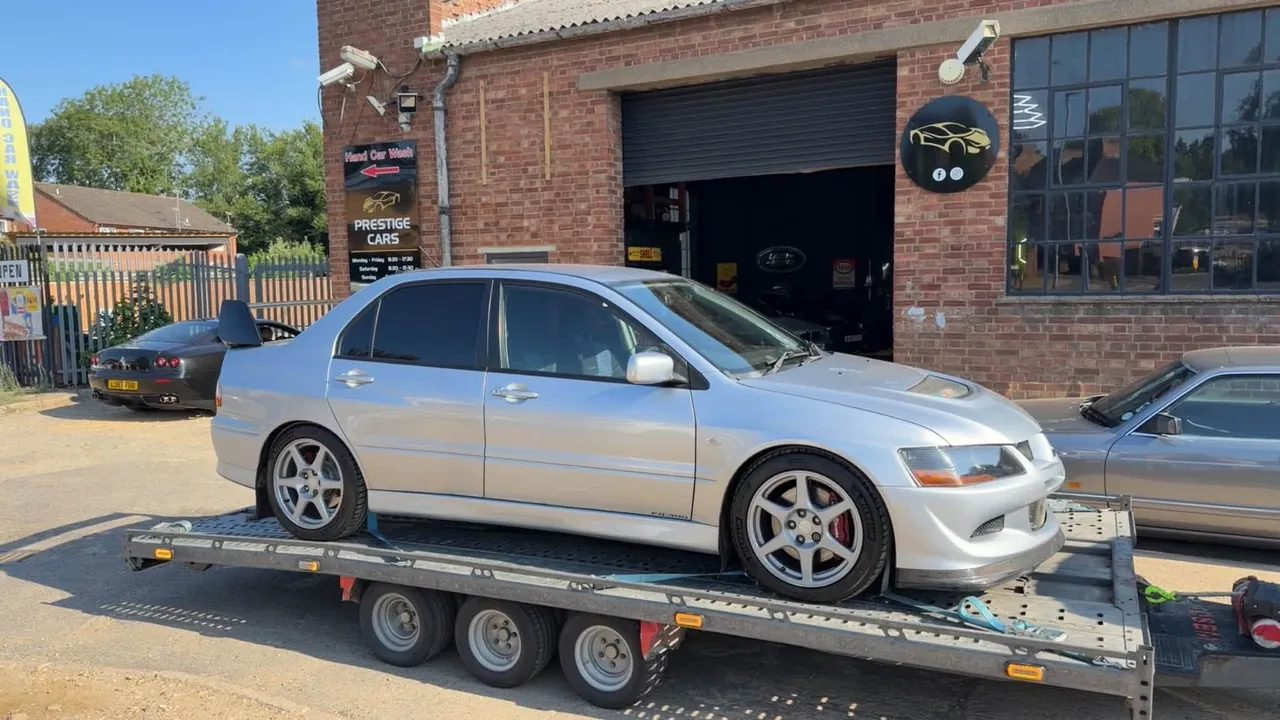
Ride height, bodywork and the collection surface matter when transporting a low car. Share these details before booking.
Photograph the lowest parts
The front splitter is not always the lowest point. Side skirts, exhausts and underbody components can also affect clearance. Send side and front photographs without crawling under an unsupported vehicle.
Show the route onto the loading area
A steep drive, speed bump, raised kerb or narrow gate can change what is possible. Photograph the approach at collection and delivery. Tell us where level working space is available.
Explain adjustable suspension
If the car has air suspension or another ride-height system, explain its current setting and whether it works. Have the person who knows the system available at collection. Do not promise the car can raise itself unless that has been confirmed.
Book the whole journey
Give both postcodes, the vehicle’s current condition and the required date. Suitable lowered vehicles can be quoted for local workshop visits or longer UK transport. We confirm the available setup after assessing clearance and access.
Prepare for collection
- Current ride height and the lowest clearance safely known.
- Photos of the splitter, sides and wheel position.
- Suspension controls and whether height adjustment works.
- Both loading surfaces and any steep or restricted approach.
Let’s plan the move
Use both postcodes for a transport quote. Send photos on WhatsApp, or call to talk through the collection.
Your questions, answered.
Is the factory vehicle specification enough?
No. Tell us about the current modifications and clearance, because the registration does not show how the car has been changed.
Can you move a car with failed air suspension?
It needs an individual assessment at its current height. Send photographs and explain whether it can roll and steer.
Do both locations need to be checked?
Yes. Loading and unloading can be affected by slopes, kerbs, ground conditions and available working space.